Ping Site
Showing posts with label weight gain/loss. Show all posts

Tuesday, November 9, 2010

It's Official: I'm Unchained From the Scale!


Attention, please: We interrupt your regularly scheduled programming of All Crazy All The Time to bring you an important announcement. This is not a test, I repeat, not a test.

TA-DA!

Those, my friends, are the batteries out of my scale, a.k.a. my Weight Watchers branded silver shackles! At first I was going to do something dramatic like take a video of me smashing my scale to bits or tossing it out of my window but the former seemed too wasteful for a frugal girl like me and the latter was simply too dangerous with as many children as I have running around my house. Oh, I'm not worried about hitting them - they move fast - but rather that they'd see mommy chucking things out the window and think all the appliances are fair game for defenestration. You may recall these are the same children that literally swung from my chandelier and ripped it right out of the ceiling.

So, the dramatic options exhausted, I went with practical. I took the batteries out and threw them away*. That way, if I ever want to weigh myself again I'll have to drive all the way to the store first and hopefully the ten intervening minutes will be enough for me to regain my senses.

Yes, I emptied out my garbage can before I took the pic - couldn't let you see the plethora of q-tips I use to clean out my earwax. I know you're not supposed to but it just feels so good! My friend Kacy on Facebook calls it an "eargasm".

What it boils down to is this: You guys were right. And I knew going in to it, writing that post about finding my "best" weight, that the first thing everyone would say to me is to chuck the scale. You've told me to do it before. So has my sister - hundreds of times, bless her heart. But you know how sometimes you don't really hear people until you're ready for their advice? I'm ready now. I can't obsess over a number I don't know, right?

This morning I did not weigh myself. At first I had a panic attack - yes, seriously - but I managed to calm down with yogic breathing and after about 10 minutes I felt fine. I think I'm finally figuring out that "fat" has everything to do with the state of my mind and very little to do with the state of my thighs.

Some of you suggested that I make a separate Great Fitness Experiment about ditching the scale but I think it's best to just roll it in with November and December's Rachel Cosgrove Experiment because 1) Got to keep going with this inertia - if I think about it too much I probably won't go through with it and 2) Rachel actually tells you not to weigh yourself while on her program. Yeah I know, I kinda forgot to mention that part when I was explaining all the "rules." Rachel's point is that this program is designed to build muscle and often people will gain weight (or not lose as much weight as they think they should be) as they gain muscle. In the book she asks if you would rather weigh 50 pounds more but fit into your dream jeans or weigh your dream weight but not fit into your jeans. You'd think it would be a no-brainer but she says you'd be amazed at how many women choose the latter option, their number is that important to them. I'm choosing the muscle option. (And I'd better be building some serious muscle because hoo-boy am I SORE. My butt is threatening to go on strike if I make it do any more lunges.)

In order to measure my lean mass, I had my body fat percentage taken at the beginning of the Experiment and I'll have it repeated at the end. I also took measurements of various body parts which I'll repeat at the end. I know these are still numbers but for some reason I don't get as attached to - or as emotionally involved with - these numbers. Probably because my biceps measurement doesn't fluctuate on a daily basis. I also have my jeans that I feel good in and can use as reality check when I need one. (Rachel calls those "thermometer jeans" - I suppose so you can measure your "hotness" by them.)

So thank you thank you thank you for your advice and your amazing patience with me as I worked through the mental stuff. This feels like the final big step I needed to take with Intuitive Eating. I'm free from the tyranny of the scale. And it feels good! (At least for now, I do anticipate some panic in the future, especially at that time of the month but I'll take it day by day.)

Have you ever been unable to do something that you knew you needed to - until one day the moment just arrived and suddenly it was fine? Do you have thermometer jeans? How would you answer the muscle vs. weight question?

*Okay, first I threw them in the garbage but then I remembered you are never supposed to throw batteries away because that's reallllyyyy bad for the environment and the last thing I need is an angry polar bear showing up at my door although that would help keep the kidlets from destroying various expensive household items but Child Services probably wouldn't appreciate the Wild Animal school of discipline so anyhow I fished the batteries back out of the garbage and instead put them in my husband's pile of paint cans and whatnot to take to the recycling center and then wrote the longest run-on sentence in the history of humankind just to make sure everyone knows that I did not, actually, add batteries to our landfill. The end.

Sunday, November 7, 2010

Finding Your "Best" Weight


Woman #1, to me: Girl, you look good! Got rid of all that baby weight! But don't you lose anymore 'cause you're right on the edge of scary skinny, know what I mean?

Woman #2, also to me: Oh you are over that edge, eat a sandwich already!

Woman #3: Shut up! Charlotte, you look fine but definitely don't gain any weight!!

I'm not sure if every woman is the subject of such weight scrutiny or if this is further evidence of my magnetic ability to draw weird comments (probably both) but this conversation sent me on the crazy roller coaster from elation to worry to chagrin in the 15 seconds it took to say it. First I'm perfect, then I'm too thin and then I'm borderline too big? This is exactly what drove Goldilocks to start hiding her porridge under her napkin and taking excessively long hikes in the woods. Fairytale gone bad, my friends.

In an effort to settle the debate - because of course I can't trust my own opinion, I'm nuts remember? - I asked a fourth friend what she thought. Not even glancing at my figure, she gave me a sheepish smile and said, "You know me, no such thing as 'too thin'..." Which is when I realized that my weight is a Rorshach test for how other women feel about their bodies and how each person interprets our societal standards about beauty. I can't trust other people's opinions any more than I can trust my own and yet, just like Goldilocks can't stop sleeping in stranger's beds, I can't stop asking for other people's thoughts.

This question is on my mind because, as those of you who follow me on Twitter already know, my baby Jelly Bean turned one on Friday! (Incidentally the exact same day Heather Eats Almond Butter and her husband welcomed their sweet baby into the world - how cool is that?!) And lurking in the background of the joyous present-opening (why play with the toy when you can shred the wrapping paper?) and the naked cake rolling (her, not me, although I was tempted) that marked this huge milestone (Joy = no more SIDs risk!!) was the Weight Question.

There's a rule that is drilled into the mind of every expectant mother that she has until the baby's first birthday to peel off those baby pounds. After that you get no more free pass and people will resume judging you. Although with all the celebrity baby explosions lately, that free year has been whittled down to a free month. And to be honest, I did pretty well with it. By 9 months post-partum I had just two stubborn pounds hanging around. Then as if by magic (or by barfing my way through a ten-mile race), on her first birthday there I was at exactly my pre-pregnancy weight. Yay?

Here's the slippery slope: My pre-baby weight - three pounds = my "ideal" weight (picked arbitrarily in my head from looking at pictures). But I can guarantee you that once I hit my "ideal" weight then I'll want to lose just a few more pounds to have a safe buffer around that number. And usually by that point I'll want just a few more gone because even though I'll have visible ribs, a chest that makes xylophones weep in envy and collarbones that could take your eye out, my thighs will still have their fatty bits at the top and my hips will still have a little extra padding. (Dear Charlotte, your thighs are Siamese twins. They have never ever not touched. Separating them would be traumatizing. Stop trying - you are not meant to have legs that are widest at the knee.) And so it goes with never feeling good in my skin, with no weight ever being low enough.

I refuse to let that happen again. REFUSE.

I have been down that path to self-hatred more times than I can count. And I have learned that thin does not guarantee happiness. In fact, at my thinnest I was supremely unhappy because I was a) really hungry b) really worried about how to maintain that weight and c) still sure I was fat! But that leaves me with the question of where exactly then is my best, healthiest weight? Do I go by BMI? By what my husband says? My friends (see above, ahem)? My doctor? A website that calculates via a survey what weight other people find you most attractive at? (Yes those websites exist and no I'm not linking one because they are crazy making in the extreme.)

When I was complaining about my "last three pounds" (I know, first-world country problem) to Gym Buddy Allison she pointed out, "How cool is it that you lost all your baby weight without dieting??" And the Intuitive Eating lightbulb clicked on. She's right. For the first time, eating whatever my body needs (not necessarily whatever it wants), I've lost my pregnancy weight without craziness. That's a freaking coup. (For reference, after the last two babies were born I ended up in eating disorder treatment.) And that's also my answer: if I trust my body enough to tell me when it's hungry and when it's full then I also have to trust it enough to tell me when it is at a healthy sustainable weight - whether or not that is the magic number in my head. That is a very scary thought for me. How will I know it when I hit it? What range should I expect for normal fluctuations? How do I quiet the crazy thoughts that tell me it's just not enough? And yet I'm 100% committed to making this work because these past few months I've come to enjoy an ease and, dare I say it?, JOY around food. I'm not giving that up. Even if it means hanging on to a few "extra" pounds.

Please help me out - tell me how you know when you are at your "best" weight! How have you learned to trust yourself? Anyone else get caught in that slippery slope of "just a couple more pounds and then I'll be perfect"?? What do you say when people comment about your weight?

Wednesday, September 29, 2010

Does Caffeine Help or Hinder Weight Loss?

Photo Credit: Fail Blog

You don't have to be a rocket scientist to know that diet pills don't work. If they did, we'd all look like Carmen Electra and spend our nights partying away with the Zantrex dancers. (Not to be confused with the Valtrex dancers - that kind of party is a straight shot to the Jerry Springer Show.) And yet they sell. So who's buying? We are, apparently.

I hate the diet pill ads and yet I'm mesmerized by them. The first time through a mag, I read it for the articles but the second time - I'm all about the advertising and I admit, these hold my attention long enough to get hemorrhoids. What is so compelling about them? The lure of quick, easy weight loss. The obvious and marked change in the before-and-after shots. The (fake, probably) testimonials. The stupid doctor. And yet, it's our modern day fairy tale. These Cinderellas went from rags to riches - beauty is the new money, honey - all with one little magic pill. That's even easier than a glass slipper! Cheaper too.

I remember one day in GNC staring at the pretty displays of diet pills when a salesman sidled up to me, "Would you pay $80 a month to be thin the rest of your life?" Honestly? I absolutely would. In fact, most people would probably pay much more than that - it's become that important to us. The trick, of course, is if they actually work. When I pointed out to him that they are just glorified caffeine pills, he huffed, "everybody knows that caffeine is the best legal weight loss supplement." I suppose he was deferring to cocaine on principle.

But is it?

Judging by the sheer number of photos of celebrities carrying coffee cups, it seems like there must be some truth to it. After all, when was the last time you saw an Olsen twin (or Lindsey or Britney) photographed without a Starbucks cup molded into her twee little hand? And caffeine in some form or another is the number one ingredient in almost every single weight-loss supplement on the market, often in heart-fibrillatingly massive doses. Even Biggest Loser trainer Jillian Michaels recommends a caffeine/white willow bark/aspirin cocktail in her book Making the Cut. Hollywood's opinion is clear.

What the Research Says
There are many studies that show that caffeine does increase metabolism by upping your heart rate causing a thermogenic effect (as is often touted in screaming letters on diet pill packaging) and increased calorie burn. Research has also indicated that it is a mild appetite suppressant. In addition, it has also been found that a dose of caffeine before your workout can help you work up to 30% harder without upping your rate of perceived exertion thereby allowing you to burn more calories.

The problem is that none of these effects have translated into weight loss. The Mayo Clinic debunks the first two points by saying that while caffeine does suppress the appetite and up metabolism, it doesn't do it to a significant degree and the effects don't last long enough to make a difference in a person's weight. Although they add the caveat that caffeine will produce a temporary decrease in weight due to its diuretic properties.

As for the last point regarding your workout, this is a documented effect. But here's the kicker: it only works if your body is not already used to caffeine. If you never have the stuff and then slam an energy drink before a big race it can definitely increase your performance. In fact, I know many a runner who swears by this. (Be careful if you try this one out though as caffeine often has the added bonus of loosening one's bowels.) But the effect is lost if your body is already acclimated to that level of caffeine. In addition, the extra work exerted during your race causes increased hunger afterward. So while you may reap some performance gains, they probably won't translate to weight loss.

But not only does caffeine use not correlate with weight loss, it is actually linked to weight gain. Donna Sundblad of the Love To Know blog writes:
Caffeine affects cravings for food because it raises the stress hormone cortisol. Cortisol raises heart rate, blood pressure and tells your body to increase its energy stores. This results in the body craving sweets. So if you're wondering why you snacked on cookies in the afternoon, it could have something to do with that coffee you drank with breakfast.
In addition to increasing cravings for sweets, raised cortisol levels have been linked to increased storage of abdominal fat, a lower immune system and higher blood pressure among other things. Caffeine has also been linked to increased insulin resistance, the scary precursor to diabetes, not to mention the lesser side effects of jitteriness, anxiety, heart palpitations and fragmented thinking.

Conclusions
Not everyone reacts to caffeine the same way. Even amongst the Gym Buddies, there are large discrepencies. I am super sensitive to caffeine and feel like I'm having a heart attack, a panic attack and diarrhea all at once but Gym Buddy Allison loves her caffeine pills to help her power through her workouts. Gym Buddy Krista seems to have built her tolerance up so high with Mountain Dew that even when she took 3 of Allison's pills, it didn't faze her a bit. It all depends on your level of sensitivity to caffeine, what dose you take and how often, and for what purpose you are taking it. If you just like your cup of joe in the morning or use it as your secret weapon in that sprint triathlon you are competing in, then more power to you. Just don't count on it to help you lose weight. And, also, don't count on the GNC salespeople to know anything.

What are your experiences with caffeine? Hate the stuff? Can't live without it? And what's your preferred form of delivery?

Tuesday, September 28, 2010

Where is the Line Between Your Weight and Yourself?


Perfectly round. A circular platform encircled by a raised bar. Like a stage! The kind that lights up underneath and lifts the performer above the crowd as mist billows beneath! And indeed I am being watched. But there is no applause and I am given no chance for a monologue. Perhaps, I think - silently, to myself - it reminds me less of a stage and more of a teleportation device. Closing my eyes I wait for a beam of light to descend and obliterate the particles of my mortal shell, to reduce me, no more no less, to the same matter that permeates the universe. No light comes. My atoms stay rigidly arranged, the faulty DNA that is Broken Me still intact, still informing.

I wish it were anything but what it actually is: a scale.

The brushed steel platform on which I stand, obediently thinking defiant thoughts, does not look like any scale I am used to. Certainly it doesn't resemble either of the torture devices to which I have arranged my bathroom, and my life, around. (Two: one to check the other. Accuracy is paramount.) This is an industrial scale, large enough to weigh an elephant but stark enough to weigh an anorectic. Even if she is too weak to hold herself up and must lean on the circular rail for support. But not comfort. No scale has ever been comforting. The very idea of weighing and measuring a human being is not so they can be loved but so they can be compared.

I know quite well what I am being compared to. The problem is that I don't know how I measure up. The digital display that shows the all-important numbers is across the room. Across the room! And turned away so only the nutritionist can read it. Upon first entering the eating disorder clinic, I had protested vehemently at this weighing ritual. "But I'm at a healthy weight!" And then, "But I'm not anorexic! I'm here for compulsive exercise and orthorexia!" Then finally, "My shoes (large wedged heels) and my coat (thick for winter) are so heavy!" All of these things were quite true.

"It doesn't matter. This is just to get a baseline. All patients are weighed at every appointment. Please step on the scale."

"But I'm not even trying to lose weight!!" My final plea. This, incidentally, was not true.

The nutritionist didn't blink. "We can't continue until you are weighed."

There was a standoff. I held out for a half hour, picking my nails, studying the pastel 80's artwork, staring blatantly at my nutritionist - a woman so thin that she must always get asked if she has an eating disorder, if she is a size 0, if she has any tips . Of course these things are filtered through the madness of my illness. I can't see anyone in any other light except fat or thin, evil or righteous, rebellious or obedient.

The thing that breaks me is knowing my babysitter can't stay past an hour. White as a sheet, I step on the scale. The silence that had started at our inauspicious beginning continues to blanket the room. I make not a peep as my worth blinks in black and white. She makes not a sound as she writes it down on my chart, her face inscrutable. Surely, I think, she had never seen someone weigh as much as I do. Surely, I think, she is horrified. Surely she thinks I'm faking sickness. It makes me feel so angry and impotent and worthless that the only thing I can think to say when we finally sit down in proper chairs - as if one of us hadn't just subjected the other to an invasive and dehumanizing ritual - in her office is, "My shoes have solid rubber heels, they probably weigh two pounds each."

She nods, unsmiling, "I'll make a note of that on your chart." And she does. Although I do not know whether she notes it under my weight or under the "disordered fixations of patient" column. I reassure myself with the thought that next time I will wear tiny sandals and take my coat off in the waiting room, no matter the fact that it is winter. No matter the fact that I am always, always freezing. Next time, I vow, that number will be less.

"Excuse me," my lips stretch and I show my teeth in what I hope is a smile, "but I didn't catch the number. What was it?"

"I already told you, the number doesn't matter. It's just a baseline for our charts. Something to see if the intervention is working." Her bony chest, visible through her v-neck sweater, rises and falls as she sighs.

Intervention. I bristle at the word. Bristle at the thought that something as intensely personal, as intrinsic to my corporeal self, as my weight is kept from me. It's mine! I want to scream. It's all I have left! I don't want to add.

"Now, since it took so long getting started," she pauses and I stare right back into her hollow-cheeked face, "I won't be able to finish all of the intake questions. But I'd like you to take this and read it before our meeting next week." She slides a bound booklet across the desk to me. It has a clip-art picture of a fruit bowl on the cover. Nutritional Guidelines the title reads. It is tacky and I hate it without opening it.

But then I remember Pam, my beloved therapist, the one who insisted that I go to this meeting, do this intake, finish this outpatient program. I can't face her next week and report yet another week of no progress. Flipping open the booklet, the first page tells me to eat a protein, a grain and a fat at every meal. The nutritionist leans over to point out more clip-art pictures illustrating each of these categories. As if I don't already know every macronutrient, every calorie, every gram, every vitamin, every category that a food could possibly be compartmentalized into by heart. Did you know an apple is a fruit?

My sickness does not make me stupid.

The nutritionist thinks it does. She hands me a list and asks me to circle which foods I will eat. Scanning the everlong list - is every food in the world really on there? Because I am an adventurous eater. At least, I used to be - I draw a heavy X through them all. This will be faster: I scrawl on the bottom "salad, berries, nuts, steel-cut oats and non-starchy vegetables."

"This is what you will eat?"

A lump forms in my throat as I realize that several days ago I struck oatmeal off the list. Grains are bad for you, our primal ancestors didn't eat them, our systems haven't evolved to digest them without inflammation. See? I had to take them off. It was the right thing to do.

"Charlotte?"

I'm not aware that I'm not saying any of this out loud. What I know is this: I am crying. And my babysitter can't stay any longer.

"I'm sorry, I have to go now." I stumble over my too-tall, too-heavy shoes. (How could I have ever thought these made my legs look thinner? Clearly I am huge and no shoes are going to hide that.)

"All right, I'll see you next week?"

"Sure." By the waiting room I have chewed my lip raw. Mothers don't have the luxury of eating disorders. By the elevator I have dried the tears. I can't go back to my children with red rimmed eyes. With problems. With heavy shoes. By the front doors I have recovered myself. I toss the booklet in the garbage can under the cigarette sandbox.

I don't come back.

I prefer my small-scale scales. The ones that don't have the power to transport me to another world. The ones that won't take me apart piece by piece, demanding my faith that it will put me back together in the end.

* Note: I wanted to end the essay here. But I worry that some of you will think that this is my contemporary state of mind. And it isn't. This incident happened several years ago and I have made amazing progress with my disordered eating. The reason I write about this today is to try and describe what it felt like for me. Why the scale still holds such prominence in my life. And because today, for the first time since my baby's birth, I weigh the weight that I did that day (of course the first thing I did when I got home and paid the babysitter was to run upstairs and weigh myself, shoes, coat and everything). Before you worry - do realize that my weight today, totally naked, is what I weighed then fully (overly) clothed. It isn't truly the same but seeing that number brought back this memory. It seemed important to write it down.

Do you have a weight that holds particular importance for you? A number that brings back a particular memory, good or bad? Edited to add: I ask this not to have you fixate on an arbitrary number but to encourage you to challenge the beliefs that you hold about yourself and your weight. You are so much more than a number.

Monday, September 13, 2010

The Slow Metabolism: Fact or Myth [Research Porn!]

"Jumpstart YOUR metabolism with a wheaties breakfast!" Eating cereal boosts your metabolism! It must be true - it's right there on the box! PS> Where is their mother?!

I'm doing everything right and it's not working! If you have ever thought the aforementioned - usually cried in paroxysms of grief after an unfortunate run-in with the Scale of Self Destruction - then you have inevitably wondered Maybe I have a slow metabolism. (Right after you have wondered if your Body Bugg got hit by lightning without your knowledge and/or if your personal trainer secretly hates people.)

The Set-Point Theory
One of the most hotly debated theories in the study of human metabolism is whether or not people have a baseline or set point, as measured by weight, that is programmed for each individual body and to which the body strives to maintain. Proponents say this is evidence as to why people have such a miserable time sustaining weight loss over time but opponents say if the baseline theory were true then nobody would ever maintain long-term weight loss and some do. On one hand, lending credence to the set point theory, people tend to weigh similarly to those they are genetically related to (even if they weren't raised by them, as seen in identical-twins-traumatized-by-separation-at-birth studies). On the other hand, NY Times science writer Gina Kolata's whole book Rethinking Thin is based on science saying the opposite. Plus they have Jared the Subway Guy and, well, you can't argue with sandwiches.

The science in this area is still emerging but several studies shed additional light on this. Here's the Spark Notes version:

1. Calorie deficits work. You cut enough calories and you will lose weight. However, the devil, as he is wont to be, is in the details. As anyone who has ever tried to create a calorie deficit can tell you, it isn't as easy as calories in, calories out. New research shows that the percentage of deficit taken, the starting point of both body weight and body fat, and the macronutrient ratios in the diet all influence the rate and the way in which weight comes off when you cut calories.

2. The key to maintaining a weight loss is "balancing your energy." Researchers have shown that people who have lost a lot of weight often overestimate the number of calories they need to maintain their new lower weight and therefore overeat, regaining their weight. When asked, the people reported that they were eating only enough to maintain but when examined by researchers they were eating more than reported. (Not that I blame them, that's just human nature!)

3. People who have lost weight have similar resting metabolic rates as their weight-maintaining peers. Your RMR is how many calories your body burns while just surviving and seems to adjust in relation to your weight. This refutes the oft-repeated statement - and the set point theory - that overweight people have slower metabolisms, even after weight loss.

4. No two metabolisms are the same. It's this last point that is the real kicker. While each person's metabolism may react to different environments (starvation, overfeeding) in a proscribed manner, factors like hormones, body fat percentage, diet composition and, yes, gender, can greatly influence it. If you've ever had a roommate who can eat 6 packages of peanut butter cups a day and still stay a size zero (like I did - egads, you should have tried living with her!) while you eat salmon and broccoli every night and can barely maintain a "normal" BMI, then you will know what I'm talking about.

Our metabolisms may not have set points but they sure have enough outside factors working on them to befuddle even the most determined dieter. I remember the first time this truism bit me in the butt. When I first embarked on my health-nut journey (that started out all about the health and ended up all about the nutty) my extra weight came off fairly easily. Yes I had to watch what I ate and exercise but it worked. I lost weight steadily. And then I hit a plateau. All my diet evangelism flew right out the window when confronted with the "But I'm doing everything right by golly!!" paradox.

Other than struggling over the next couple of years to lose a measly few pounds, I didn't get much insight into this until The Great Over-Training Debacle of 2008. During this time, I had my metabolism thoroughly tested - both in the doctor's office (they ran tests on my thyroid and my hormones and even my baby maker - which thankfully was unoccupied at that time) and in the gym via hydrostatic weighing and the Darth Vader-on-a-treadmill metabolic testing. Their conclusion? I need 1242 calories a day to go about my daily life. I still remember the professor's face when he gave me the news, his look daring me to complain. Which I did. Vociferously! "That's IT?!" I shrieked (politely - I'm a very considerate shrieker.) "That's all I get to eat? That's not even a whole meal at T.G.I.Fridays! I'll never get another Blizzard again! I HAVE THE SLOWEST METABOLISM EVER!!!"

To which he replied, every bit the scientist he was, "It's not slow. It's efficient. Your body works perfectly well and is extremely healthy with only half the energy requirements of the average man." While he was waxing eloquent about my body being a Prius in a world of Hummers, I was trying to come to grips with the fact that at Superbowl Parties there would be nothing super in a bowl for me. I could have one chip with a dollop of hummus while everyone else got Chicago-style pizza.

And then I said it. The phrase every parent hates most: "It's not fair."

"Of course it's not," he replied simply. "It never is."

This idea of "deserving" more food has been a real struggle for me as I've progressed with Geneen Roth's Intuitive Eating program. In the past I've focused endlessly on how to "stoke my metabolic fires" "become a fat-burning machine" and "rev up my engine" so that I could eat whatever I wanted with impunity. So every time I feel my body get full after just a few bites, my mind stomps its foot and cries, "It's not fair! This food is yummy and I earned it! Everyone else gets to keep eating it! I want to keep eating it too! What if they eat it all and there's none left for me?!" For whatever reason, talking back to that voice is very difficult for me. Sure I'll survive the Apocalypse (party with the 'roaches!) but that's small comfort when everyone else is snarfing Concession Obsession with abandon.

But the other night I had a breakthrough. There isn't any point in trying to either speed up or slow down my metabolism. Like Andrew said so many years ago, "Why would I want to fix my metabolism? It's not broken." My metabolism may be slow(er) than most but it works great keeping my body running. And you know what? I DO get to eat whatever I want with impunity. I just have to get my wants in line with my needs. When I eat what my body wants (not what my mind wants - that's different), I don't feel restricted or left out or unhappy. I just feel good. Even if that means I only eat four bites of a homemade brownie.

My husband's fallen in love with this reality show "Out of the Wild: the Alaska Experiment" where they dropped a bunch of city slickers with no survival skills into the middle of Alaska, gave them a map and told them to make their own way out. On one episode, the biggest and toughest of the men faints from lack of food (seriously, the people who signed up for this show make Survivor contestants look sane) and the voiceover explains flatly that "muscle is expensive" and that women are "better at conserving body mass on less food." Like the professor said, we're efficient. Long live the women!

Do you think your metabolism is slow or fast or just normal? Does it matter to you? Do you feel like your body has a set point it wants to stay at? How do you deal with the "It's not fair, everyone else gets to double-fist artichoke dip while I'm stuck with crudités?" voices?? (PS> Did you see I got the é to work?? I did it! Wheeee!!!!)

Tuesday, August 31, 2010

Fasting: How Religion Influences Exercise


We've been one Gym Buddy short in the gym this past month and it's not because she got sick of us randomly drinking out of her water bottle. (Dear Target, when you decide to sell BPA-free water bottles at a ridiculously low price please have more than two colors available as we are easily confused, especially after running Tabata sprints. Sincerely, The Gym Buddies.) Ramadan, the month-long fast observed by most Muslims, is the reason Gym Buddy Krista has temporarily gone M.I.A.. For some reason she doesn't feel like working out when abstaining from food and drink during daylight hours which, since Ramadan falls in August this year, means she fasts from about 4:30 a.m. to 8:30 p.m. - gotta love living on the 45th parallel!

Hmm... which one is Krista? I'll give you a hint: she's wearing black.

I can relate. In a previous post I mentioned how, as a Mormon, I fast at least once a month for a full 24 hour period. Sagan of Living Healthy in the Real World, asked me to write a post about my experience with voluntary starvation.

Spiritual Benefits
First, I would like to say that for me, fasting is primarily a religious endeavor, a matter of faith. Fasting isn't just about not eating and drinking but is primarily about building a closer relationship with God. The 24 hours is supposed to be a time of prayer, meditation and study. In addition, we donate the money we would have spent on food to the poor and needy in our area so as to keep our focus on serving others. I'm not going to lie: going that long without food or water isn't easy and sometimes it makes me seriously grouchy but I'm not perfect and if anyone knows that, it's God. I figure He's pretty forgiving when I make the kids eat PB&J's because I don't want to cook them something I'm going to have to smell and drool over.

Physical Benefits

That said, there are a lot of benefits to fasting (or intermittent fasting, "IF", as if is often referred to) that extend quite firmly into the physical sphere. Long considered the purview of the incense-and-nutritional-yeast crowd or filed under The Weird Things Hollywood Types Do, fasting isn't generally on most people's radar. But recent research shows that this primitive survival technique may actually have some impressive health benefits.

New research from the American Heart Association found that people who fasted were 39% less likely to have coronary artery disease. This study looked at a sample of 4500 men and women, 90% of whom were members of the Church of Jesus Christ of Latter-Day Saints, popularly known as the Mormons. Previously researchers had thought that the Mormons' lower risk of heart disease was due to their religious prohibition against smoking but researchers were surprised to find it most correlated to the monthly 24-hour fasts that adherents practice.

In addition to the heart benefits, Mark Sisson of Mark's Daily Apple and guru of all things IF cites a study that showed, ""health benefits... in insulin resistance, asthma, seasonal allergies, infectious diseases of viral, bacterial and fungal origin (viral URI, recurrent bacterial tonsillitis, chronic sinusitis, periodontal disease), autoimmune disorder (rheumatoid arthritis), osteoarthritis, symptoms due to CNS inflammatory lesions (Tourette's, Meniere's) cardiac arrhythmias (PVCs, atrial fibrillation), menopause related hot flashes." Mark is so convinced of the benefits that he has made fasting one of the primary points of his Primal Blueprint and encourages everyone to try it. Many other studies support the health benefits of fasting including increased insulin sensitivity, faster healing from injury, cellular rejuvenation, decreased blood pressure, reduction in oxidative damage, less type 2 diabetes, less cancer, less cardiovascular disease, protection against heart disease and - the holy grail of health nuts - decreased fat mass. Who wouldn't want all that awesomeness??

Psychological Benefits
Another benefit of fasting, according to Dr. Judith Beck, author of the popular Beck Diet Solution is that it helps you to see that "hunger is not an emergency." So many dieters derail from their carefully planned meals when the hunger pains strike because they think they are starving. They think that if they don't eat immediately then they will be overwhelmed by their hunger when the truth is that hunger waxes and wanes and you will not die if you don't eat for a few hours. Dr. Beck points out that once her patients fast for at least one meal, they see for themselves that they can survive and thrive despite hunger that their cravings have less power over them and it becomes easier to stick with that diet.

But...

Many people, especially hard-core fitness types (ahem, my name is Charlotte and I'm an addict...), fear if they don't get some nutrition every 3-5 hours then they will lose muscle and kill their metabolisms. Actually the opposite is true, according to Mark Sisson (the man with all the answers). "It all makes sense from an evolutionary perspective, because our predecessors almost certainly went through regular cycles where food was either abundant or very scarce. The body may have established protective mechanisms to adapt to these conditions by sensitizing insulin receptors when it was critical that every bit of food be efficiently used or stored (as in famine), or by desensitizing them when there was a surplus, so the body wouldn’t be overly-burdened by grossly excessive calorie intake."

Food is great. It's delicious (usually) and fun to eat and everyone, everywhere needs to eat it. Going against this primal urge is difficult, especially at first. While there are, of course, reasons why some should not attempt fasting (if you are struggling with an eating disorder, for instance, or diabetic or hypoglycemic) for most of us it can be an awesome experience on many levels.

To try it, pick a day when you don't have a lot going on (the day of your big presentation or your final exam is probably not the best time to start this) - I usually choose my rest day so I don't have to worry about dying of thirst after a run - and just plan to skip a meal*. Then try skipping two. The type of fast you do - juice, water only, full abstinence - is up to you. There are as many types as there are people. Just take careful note of how it makes you feel and what, if any, differences you notice. Fasting may be the cheapest and simplest health "products" out there! (Note I did not say "easiest".)

Caveat: When people discover that I fast, they generally say "Oh, you must lose so much weight!" This would not be true. Both Krista and I have noticed that fasting does not cause either of us to lose weight. While the research shows that fasting, over a long period of time, can help you maintain a healthy weight, it doesn't work like a crash diet dropping 10 pounds in 10 days.

Have I convinced you to try it? Have any of you fasted before? What kind did you do and how did it make you feel? Do any of you have religious practices that affect your workout? Ever drank out of a stranger's water bottle by mistake?

*Be smart. Check with your doctor first if you have any health concerns. I am not a doctor, a nurse, a guru of anything or even all that smart sometimes (as evidenced by my massive collection of ridiculous footwear). If you start to feel sick, stop immediately.

Sunday, August 22, 2010

Plateau Busting 101

Manscaping your nipple hair to attach to your nostril hair won't help you lose weight butI admire his willingness to change things up! Also, I think this dude shaved a swatch down the top of his head. That might be my fave part.

Sprained ankles. Broken bones. Gym Hottie rejection. Stolen spots. The occupied state of the "lucky" treadmill. Pistol whipped by a resistance band. A personal trainer with cold calipers and cold fingers. All the TVs locked onto The Hallmark Channel during a Nicholas Sparks cry-a-thon. Discovering the protein powder mixed in your water bottle is actually infant formula. There are many reasons for tears in the gym and I've seen my fair share of them. (Okay, that last one was me. (Fine, all of them were me. Shut up.)) But the number one reason I've seen people of both genders collapse in hysterics can be summed up by one word:

Plateau. duh-duh-duh!

Enter from stage left (gym studio left?) my gorgeous, leggy, thin, blond friend. While she recently had a great deal of success losing some poundage, she was not quite yet to her goal and yet her weight loss had stagnated. This, in spite of continuing with her healthy eating and exercise habits. Nothing, my friends, sucks worse than doing "everything right" and have it not work anymore. I wrote a detailed - and rather witty, if I do say so myself - post on plateaus and how to deal with them back in January. (Really go read that one first.) That one deals with all touchy-feely weepy aspects of the Dieter's Nightmare. (And you thought it was those awful Weight Watcher "cakes" that appear twice their real size on the outside of the box and taste just like the inside of the box. If the box was spread with chocolate-colored grout.) The basic gist is that we've all been there. Some of us are still there. It royally stinks.

But my friend wanted more detail about point #4, "Change it up." (Well, actually she just wanted to borrow my Jillian Michaels book Master Your Metabolism but I can't find it - I loaned that sucker to somebody, if you know who you are can I please have it back? K thx! - so I offered her my advice as a sorry second.) There are a ton of variables to try changing to see if you can kickstart your metabolism back into high octane burn. Here are a few suggestions to try and a few not to try:

Try It!
1. Interval training. The science really supports this one. Intervals done right are very painful (you're training at 90% or more of your maximum ability) but they are short. As with most exercise, more is not better (hgh, human growth hormone, works while you rest, remember?) but do try working in a couple of interval workouts a week. 20 minutes max is all you need. And don't tack them on to another workout. Seriously. Because then you won't be able to give those intervals your all. Bored of treadmill sprints (or they give you shin splints)? Try bike sprints. Or rowing sprints. Or, heaven help you because you will barf, swimming sprints.

2. Mess around with your macronutrient ratios. Recent research has shown that eating fat and protein for breakfast can give you a metabolic boost that will help you burn fat throughout the day and help you stay full longer. I'm not saying cut out healthy carbs all together, just don't fear the fat! And don't mess around with that Smart Balance stuff - go for the full fat butter, coconut oil, olive oil, heavy cream and whole eggs. For instance, my go-to breakfast these days are my (by way of Deb, Allie, Heather and half the fit-o-sphere) protein pancakes topped with a tablespoon of coconut oil or two tablespoons of heavy cream.

3. Try a new type of exercise. Always do step class? Try martial arts. Die-hard runner? Try boot camp. There are more ways to exercise than even I can blog about (not that I'm not trying, mind you) and change is good. It shocks your body and will make you sore in places you didn't know you could be sore!

4. Cut back on your cardio. For many of us, the instinct to just do more - more classes, more miles, more laps - is strong. If some is good, more is better right? Not so with exercise. And you know that I speak from experience here. Too much cardio actually teaches your body to store fat, can increase your hunger or just convince you that since you ran 10 miles you can eat whatever you want, goldanggit. Many of the leanest people I know (holla, MizFit!) do minimal cardio and focus mainly on the weights. I'm not telling you not to do cardio - you can have my endorphin rush when you pry it out of my cold dead fingers, er, neurons - just to resist the impulse to do more of it. If you want to run a marathon to prove to yourself you can do it or because you love to run or because racing gives you a thrill or even just because you think the finisher's tee is adorable then you should totally do it! But if you are running a marathon because you think it will make you lose 10 pounds, rethink that.

5. Lift heavy stuff. If you haven't started lifting weights, do it. Not just because adding muscle will increase your resting metabolism (not by a ton, but every little bit helps) or because muscle takes up less space than fat but because it is good for you in so many ways. Increased bone mass. Stronger heart. Fewer varicose veins (unless you squat too heavy and then you can get hemorrhoids but that's another post). Increased confidence. And if you already lift weights, change it up: try lifting heavy with few reps, or light with many reps. Try doing supersets. Lots and lots of different programs out there.

6. Eat more calories. This may sound counterintuitive but I think by now we've all heard about how our metabolisms will head off into the Siberia of starvation mode if it thinks it's not being sufficiently fed. Cutting back on your calories only helps you lose weight to a point. You may actually need to eat a bit more. How to tell? Do you feel tired, lethargic and/or more cold than usual? Have you lost your sex drive? Losing your hair? Brittle or strangely ridged nails?

7. Get your metabolism tested. If you have health insurance and this isn't too costly, this can be a good thing to do if nothing else is working. Get your thyroid tested (especially if you are pregnant, recently were pregnant, are lactating or are female and over 50). Get your vitamin and hormone levels checked. It can't hurt and who knows - it might turn up a health issue you need to know about!

Maybe

1. Calorie counting. For me this one is a loaded weapon but the truth is that it takes you an hour to burn 500 calories but it only takes you five minutes to eat a Cinnabon. It's much easier to watch what you eat than to change your exercise. If you are trying to break through a plateau it can be useful to track your calories for a while to help you be honest with yourself about what and how much you are really eating. It can also help you see patterns (like, say, if you hit a plateau at a certain time of the month every month.). But if you decide to do this one, do it with care and kindness. Too many of us have sacrificed our well being and mental health on the (un)holy altar of FitDay.

2. Cleanses. I've never done one of these. While I do fast for 24 hours once a month for religious reasons (I'm a Mormon), I've never tried a fasting or juice or any other "cleanse." I have friends that swear by them. I remain dubious. If you do one, drop me a line (or write a comment) and tell me about your experience with these!

Don't Do It

1. Pills. Just remember this: if they actually worked, every one would buy them and we'd all be thin. They don't work and they prey on your hope and your pocketbook.
2. Extreme diets. Sure you'll drop pounds but you'll drop so much more than that too. This is how eating disorders are born.
3. Over-exercise. Learn from me. Please. If there is any silver lining to having gone to treatment twice for exercise addiction, it is that perhaps I can spare some of you a similar fate.
4. Tapeworms. Um, ew.

I know I didn't hit everything - what suggestions do you have for busting through a weight loss plateau? What have you tried that has worked? What have you tried that hasn't?

Thursday, June 17, 2010

How Thin is Too Thin?


Our society is warped. Twisted. A veritable fun-house of fat and thin mirrors when it comes to body image. One on hand we have Kim Kardashian, queen of curves, compelled to exclaim in an interview, "I look a lot bigger on TV. When I meet people, the first thing they say is, 'Wow, you're so much smaller than I thought'. I look about 15 lbs heavier. I'm only 115 lbs, and everyone thinks I'm like 130 or 140. It's bizarre. I'm a US size 2!"

On the other hand we have Kai Hibbard, a finalist on Season 3 of The Biggest Loser, interviewing about how the show gave her an eating disorder to the point where she was eating 1,000 calories while working out 5-8 hours a day. Says Kai about the consequences of her experience, "It gave me a really fun eating disorder that I battle every day, and it also messed up my mental body image because the lighter I got during that T.V. show, the more I hated my body. And I tell you what, at 144 and at 262 and at 280, I had never hated my body before that show."

Kim Kardashian and Kai Hibbard I am not (and not just because my name doesn't start with K) but I really sympathize with their feelings about being on TV and dealing with the resultant body image woes.

I've gotten a lot of interesting feedback from my 20/20 piece but one of the most common comments I've got is some incarnation of "But you never looked that skinny." The implication of course is that I wasn't skinny enough to have an eating disorder. I first encountered this during my pre-interview process with Fox News. The producer kept asking me for my "skinniest skinniest pics, the ones that show the most bones." I knew what they wanted. They wanted to see a 64-lb walking skeleton with a nasogastric tube and furry arms. Because that's good television. From the very beginning I told them I never got that thin but sent them some pictures from that time period. They weren't satisfied and kept phoning, texting and e-mailing me for better pics all the way until I'd boarded my airplane. If I were more technically savvy it would have driven me to Photoshop, I swear.

The Skinny Pics Debacle Take 2 happened after the 20/20 interview taped, but before it aired. The producer for the segment e-mailed me many times asking for better shots with the implication being skinnier shots. But it wasn't limited to just TV people with their characteristic penchant for extremism. My own family joined the chorus. In an e-mail to my uncle about the piece, my father wrote, " I saw her frequently through the whole time period in question and yes, she was slim, but she was healthy, energetic, and happy (as far as I could see), and so I was never worried. I admit freely that she cares about food in ways I don’t, but hey, different strokes for different folks."

I love my dad dearly and consider him a great friend as well as a great father but his seeming dismissal of my illness stung. Friends and acquaintances jumped on the bandwagon as well - some by comparing me to the super-skinny Johnny of the 20/20 piece and others by comparing me to popular TV or movie stars. "Well, you were thin but not like Angelina Jolie thin. And she doesn't have an eating disorder." To my crazy mind all of these comments came out sounding like "You weren't thin enough as a normal girl and you certainly weren't skinny enough as an anorexic/orthorexic. Even when you're bad you're not good enough!" How skinny would I have to get before people thought I was actually sick?

Here's the thing: I had a BMI of 17. According the World Health Organization anything under 18.5 is considered unhealthy. But in a world where Kate Moss and Victoria Beckham subsist at about a 16, I do look kind of porky. And it wasn't just low weight. I lose my period when my BMI dips below 19 - a fact I've discovered on several occasions in my post-pubescent life. Amenorrhea is indicative of such poor nutrition that the body feels like it cannot support a baby. I had low iron, whacked-out electrolytes, vitamin deficiencies, a suppressed thyroid, heart arrhythmias and hair loss. But worst of all was the mental damage. I was depressed, neurotic and withdrawn.

It's true that I didn't break any bones, lose teeth or end up in the hospital with a tube up my nose - a fact for which I am deeply grateful. But I did hurt. It's just most of the hurt was emotional. And that's the wound I'm still working on healing.

At my thinnest - and most fragile mentally - I got tons of compliments. Everywhere I went people commented on my physique. One woman at the gym even told me I had "the perfect body" (as if there is such a thing). I loved how I looked in clothes, even while I was secretly horrified at how I looked naked - since I lose weight in my upper body first, my chest looked like a xylophone while my legs still kept their fatty bits. My therapist maintains that the compliments came because of my increased self confidence - and she may be right - but I think a lot of it had to do with the fact that we are conditioned to appreciate only extremely thin women.

A lot of women with eating disorders look "normal" to us.

My dirty little not-so-secret is that I would love to be that weight again, ribs and all. But I can't do it and remain healthy. Some women probably can weigh what I did and keep their periods and their sanity. Not me. Not my body. And so I choose to maintain a weight higher than what is comfortable for me and waffle back and forth between self -hatred and -love because I know where the alternative leads and I can't pay that price anymore. Even if that makes me look 15 pounds too fat on camera.

What about you - does the weight you personally like yourself best at correspond with the weight other people think you look good at? Have you, like Kai, ever felt worse about yourself at a lower weight?

Tuesday, June 1, 2010

Does Acupuncture Work for Weight Loss?

This guy has 200 flags stuck into his scalp with acupuncture needles to celebrate the Olympics. (He might also be a unicorn... shhh, only virgins can see them!)

"Hey, you wanna feel something gross?" I asked Gym Buddy Allison a couple of weeks ago as I started to pull down the top of my pants. It is to her credit that she waited a full 20 seconds before falling on the floor laughing. To workout with me is to love me.

Once I explained that it was not Flasher Friday - an explanation that was warranted as I have inadvertently flashed her thanks to the evil combination of loose-waisted yoga pants and a heavy pager that the childcare staff insisted I keep on my person at all times in case my three-year old insists again that he cannot use the potty unless he is 100% naked and then decides that clothes are overrated in general - she obliged. (While we're telling naked child stories, I have to say that my best one ever was when my then-four-year-old son dropped trou in the checkout line at the shoe store in the mall. Because, as he loudly announced, his butt itches. The parents of the teenagers working the counter can thank me later - nothing says abstinence like a starkers kiddo with his fingers so far up his heinie not even a latex glove would have helped.) I just wanted her to poke my tummy so I could show her how much bigger my diastisis (the separation between my abdominal muscles, also known as my Push Present from Jelly Bean) has gotten. Good friend that she is, she poked me like the Pillsbury Doughboy, that is if the Pillsbury Doughboy had birthed him 5 marshmallows and had subsequently deflated like a day-old roll.

So when Allison asked me the other day if I wanted to see her stomach, I figured I owed it to her. See, girlfriend has been taking a novel approach to losing her post-baby weight. In the last 12 weeks she has dropped 20 (ish) pounds and 6% body fat. Her secret weight-loss weapon: long skinny needles stuck into her abdomen, hooked up to a car battery and juiced. Oh yeah and she tapes magnets to her ears.

No, she wasn't abducted by Easy Rider aliens. She's been getting acupuncture! Who knew that the quickly growing alternative therapy could be used for weight loss? Up until Allison went all guinea pig on us, I'd never heard of it. According to some practitioners,
"It is not a panacea or a wonder cure in the treatment of weight control. But, acupuncture is effective in making it easier to lose and maintain that loss if the patient is willing to change their lifestyle. The exact mechanism by which acupuncture works is unknown but we know that acupuncture needles inserted into specific points on the body and in the ear release endorphins which have a calming and relaxing effect that makes it easier to deal with stress, frustration and anxiety that can trigger overeating and bingeing on fattening foods. Also endorphins affect the digestive and hormonal systems so acupuncture can help rebalance the organ systems that are running too fast- or in this case too slow—i.e., the metabolism and the will power. "
There was also some stuff in there about unblocking your chi and whatever but honestly they had me at slow running will power. Allison offered to walk us through one of her sessions:

First, they stick a bunch of tiny needles into her legs and feet. What those have to do with appetite and will power I have no idea but doesn't Al have great calves??


Then they stick more needles into her stomach. They attach electric nodes to some of the needles and then turn on the battery pack (seen between her legs, in the first pic). As you can see from the redness around the needles, it's more than just a little jolt.


Here's how it looks all hooked up. Al then lays there while the needles do their thing for about a half hour. She says the battery does make her stomach muscles twitch - a feeling she describes as "uncomfortable but okay" - but I should warn you that I know from watching her do Crossfit that her tolerance for excruciating pain is quite high.


Lastly, her acupuncturist tapes two seeds or magnets to her ears (they are the tiny black dots - one at the top crease of her ear and one just outside her ear canal). She wears them for 2 days post-puncturing and is supposed to squeeze them to suppress her appetite and prevent eating out of boredom.

So does it work? I couldn't find any research studies that examined acupuncture's effectiveness in weight loss but according to Allison's study of one, there seems to be some merit in it!

Have you ever tried acupuncture? Did you like it? What's the strangest weight loss method you've tried? Anyone have any great naked kid stories??

Wednesday, May 19, 2010

Hooters Waitress Suspended For Not Fitting Uniform

Hooters made news today by admitting what most of us already know: Despite claims that it is best known for its wings it turns out it is really selling breasts. And the rest of the well-shaped bodies of their famous scantily clad waitstaff. A Hooters in Detroit - does this city really need any more bad publicity? - recently put 20-year-old Cassandra Smith on probation for gaining weight.


The pretty blond waitress and two-year Hooters veteran was called in for her annual review only to be confronted by her manager and a representative from corporate headquarters about her recent weight gain. The company offered her a free gym membership and 30 days to slim back down into tip-top short-shorts shape or face a "separation" from the company. (No word if she would be able to sue for alimony.) While this might seem despicable at first glance, the company defended itself by making the comparison between their waitresses and the Rockettes and Dallas Cowboys Cheerleaders saying, "We will say that our practice of upholding an image standard based on appearance, attitude, and fitness for Hooters girls is both legal and fair."

Certainly Smith had to know when she was hired that they weren't paying her for her stellar mastery of the menu nor her uncanny ability to remember all her customer's names. So while she doesn't have the paycheck or the celebrity (or the rockin' costumes - those orange shorts are a travesty of American Apparel proportions) of a Rockette or Cheerleader, she shouldn't have been surprised when she was commoditized like one, right? Only two problems with that argument:

1. Smith is 5'8" and 132 pounds. Yeah she's changed since they hired her but she's hardly portly by any stretch of the imagination.


2. Her boss is this guy. Granted he's not the one, er, pushing wings but really the irony had to be rich in that room. Normally I would abstain from making a comment about anyone's weight but since he brought up the topic, I say he is making himself fair game for public scrutiny.


Smith is said to be considering legal options but I'm guessing that the corporate giant is going to win this one. First, it's an industry truism backed by research that the hotter the waiter or waitress, the better the tips and the better the customer perceives the establishment. Hooters just happens to be more honest - and brazen - about that fact. Second, it's certainly not the first company to fire employees based on physical appearance. Even Prada does it. Third, as much as I hate that this is the case, women are sexually objectified in many, many industries. Heck we're even teaching 7-year-olds that the way to be loved and celebrated is to shake it like a stripper:

Do I wish that Cassandra Smith hadn't been suspended from her job for her weight? Absolutely. Do I also think that she should have expected this given the company? Yeah, probably. Do I think that this would be the perfect opportunity for her to find a new career based on something other than her looks? Definitely. Am I done asking myself questions so I can answer them? Apparently not.

What's your take - was Cassandra Smith fairly suspended? Have you ever worked at a job that required you to look a certain way? How did you feel about it? Did you see the "Seven Year Olds Going Hard on Single Ladies" video? (Tough luck if you didn't, it's already been taken off YouTube for copyright violations.) What do you think - little girls just having fun (and being really really talented dancers) or little girls being pornified with the consent of their parents?

Sunday, May 16, 2010

Models Falling From the Sky: Thin is Not the New Black


Suicide is in the air. Kazakh model Ruslana Korshunova dove to her death from her New York balcony. Canadian model Hayley Kohle leapt to a similar fate from a balcony in Milan. On the same day as Kohle, model Randy Johnston died of a drug overdose. Columbian model Lina Marulinda also chose a free fall from a balcony. But there are other ways to die in the air besides jumping. Models Lucy Gordon, Daul Kim and Ambrose Olsen all recently hanged themselves, Olsen just last month. And of course, the inimitable designer Alexander McQueen ended his fashion juggernaut along with himself by hanging last February. Death is not yet in the ground. Just a few days ago model Noemie Lenoir was found in a forest, nearly succumbed to an intentional drug overdose. Mercifully she is recovering. [Source]

These deaths should not have happened.

By all accounts each of these young models and McQueen were at the height of their careers. Not only were they young and impossibly beautiful in a world that values nothing more but they had also achieved a degree of success in a highly competitive, fickle field. Why they would want to end their lives is a personal and, most likely, unanswerable question. And yet if anyone would have a reason to live, you'd think it would be these who were living the very definition of the dream.

Tragically many people every year choose to end their own lives and so I am not sure if this recent spate of model suicides (that looks funny every time I type that, as if they are modelling the proper way to die - setting the fashion to the very end) is disproportionate to that of the general population. But I do know this: if you ever needed proof that being thin and beautiful is not the secret to happiness than this is it.

Most of us can say when confronted with such an obvious example that of course being skinny, young and hot doesn't automatically make you happy- Pamela Anderson alone should be cautionary tale enough - and yet we are sold this exact message in hundreds of insidious ways every day. Many of us buy into it. I buy into it. It's so pervasive that I'm amazed whenever I run into a woman who doesn't believe it. I want to grab her buy the shoulders and ask her where she gets her incredible self confidence, why she hasn't been been beaten down by the relentless message that she isn't enough, but she could be if she just lost weight/erased wrinkles/got bigger boobs/lightened her hair/got a better wardrobe/colored her eyes/toned her tummy (in 10 days! See page 54!)

There isn't anything wrong with trying to be beautiful, to be healthy, to be your best self. And yet this drive to improve - or "addiction to fixing" oneself as one astute e-mailer put it - is a problem when it engenders self hatred. How is anything beautiful supposed to come out of hate? Ironically this tactic of self-hate is often one of the first weapons we employ, turning self improvement into self warfare. It does work. Sort of. You can hate yourself thin. I've done it before. But then you are just thin and unhappy, like so many falling models.

We live in an era where a diet - a diet! - is unironically called "Live Your Best Life." (You can even buy your "Best Life" at your local grocery store, just look for the little green labels on your favorite brands! It doesn't say but I'm assuming if you collect enough of the Best Label boxtops and mail them to Oprah then your Best Life will arrive by mail 4-6 weeks later.) Where losing weight is the fastest way to gain instant celebrity, or if you are already a celebrity to get a magazine cover. Where despite the highest unemployment rate in recent history, cosmetic sales and plastic surgery are increasing at an unprecedented rate. An era where models rain from the sky.

It's sheer craziness. It's jumping-off-a-balcony madness. I know all this and yet, deep down, I still believe if I could just lose these last 10 pounds I'd be happy. But thanks in no small part to you all, I think I'm finally willing to give that belief up. It feels scary to me. For one, I've believed this as long as I can remember. I may have outgrown Santa Claus and the Tooth Fairy but I still cling with child-like devotion to the Beauty Bunny. And also, I'm convinced that this perpetual war with myself, this intense hatred, is the only thing between me and weighing 1,000 pounds and being housebound for the rest of my life. I'm afraid that if I give up fighting then I'll lose everything. But I think that too is a myth. By fighting myself how can I do anything but lose? The key to my freedom is to give up the fight. Can I trust my body that it wants to be healthy? I hope I can. Because nobody should be falling; we should be flying.

Anyone else buy into the myth that thinness equates to happiness? Anyone else addicted to fixing themselves? Anybody else convinced that fighting yourself is the only thing keeping you from oblivion? Anybody totally sick of reading about this still?? (Anyone? Bueller? Bueller??)

Thursday, April 15, 2010

What Do You Do With Your Oxygen?

This man is pretty much an oxygen savant. He breathes it and then recycles it into energy! And to think Al Gore got the Nobel...

What, you think you're doing well just by breathing the O2? Pansy. Why settle for basic respiration when there is so much more you can do with oxygen?

Top 3 Things To Do With Your Oxygen:
1. Sleep ala Michael Jackson (and I don't mean in the final sleep sense - may he rest in peace - but in the sleep sense he was so famous for in life. I know, can I make this any more complicated?) so you too can live to "see world peace, a world without hunger, a world where children and all mankind know no suffering." Who wouldn't want that kind of Coca-Cola utopia? All you have to do is live in a hyperbaric oxygen chamber. Fun!

2. Become an elderly terrorist by insisting on smoking while toting around your oxygen tank that you must have for your inexplicable emphysema. Tell everyone loudly that oxygen is NOT flammable (which is true) but fail to mention that it will make a very pretty combustion reaction when in the presence of fuel such as, oh, clothing, hair or skin.

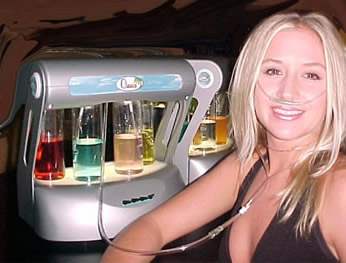
3. Go to an oxygen bar just so you can use the line "Want to share my oxygen, baby? I'm trained in mouth-to-mouth." Practice in front of the mirror first for maximal effect. I'd say practice ducking too but if she's got a canula up her nose then she probably won't be too swift.

O2 4 U!
Or you could be boring and use oxygen to metabolize your food. Which technically isn't an option as we all do it and, I know, it's not funny. Sorry. But hey, at least I got to do my PSA about smoking and oxygen tanks (Hi Grandma!!). And who doesn't love a good Michael Jackson segue?

A few years ago a diet fad came out about eating for your metabolic type. At the time I summarily dismissed it as the underlying science seemed shoddy and the press very hyperactive and anecdotal. This weekend however, I decided to take a closer look at it. Why? Because it turns out that it tells me exactly what I want to hear. Research, smesearch.

Everyone's cells use oxygen to convert food into energy. This is called cellular oxidation. Back in the 1930's (incidentally the era for best women's hats ever), while everyone else was worrying about how to procure food without resorting to the Joad method, scientists discovered that the rate at which people oxidize their food varies. Researchers postulated that given this natural variation, usually attributed to genetics and climate of origin, different types of oxidizers would thrive on different types of food.

What Type Are You?
According to Making the Cut by Jillian Michaels - she of Biggest Loser infamy - there are three basic types:

Slow oxidizers: "Also known as carbo types or sympathetic dominant. They generally have relatively weak appetites, a high tolerance for sweets, problems with weight management, "type A" personalities, and are often dependent on caffeine."

Balanced oxidizers: "Mixed types are neither fast or slow oxidizers, and are neither parasympathetic or sympathetic dominant. They generally have average appetites, cravings for sweets and starchy foods, relatively little trouble with weight control, and tend towards fatigue, anxiety, and nervousness."

Fast oxidizers: "Also known as protein types or parasympathetic dominant. They tend to be frequently hungry, crave fatty, salty foods, fail with low-calorie diets, and tend towards fatigue, anxiety, and nervousness. They are often lethargic or feel "wired", "on edge", with superficial energy while being tired underneath."

According to Ms. Michaels, your oxidation type changes your macronutrient ratios. Specifically, slow oxidizers should eat Ornish at 60 carb/25 protein/15 fat. Balanced oxidizers go with The Zone at 40/30/30. Fast oxidizers are Atkins at 20/50/30. She then goes on to give you a complete list of foods in every category that you should and should not eat, depending on your type, complete with menus.

This was interesting to me because a) I covet Jillian's abs and b) if I allow myself to eat how I feel best, I fall very close in line with her slow oxidizer recommendations which according to her test, is what I am. Given the hype lately around low carb and my love for Mark's Daily Apple, I have been trying to limit my carbs. This makes me feel groggy, lethargic and all-around crappy. But as soon as I get my carb infusion (usually via healthy carbs like whole grains or fruit although a box of Junior mints will also do the trick) then I feel awesome again. I love it when people tell me what I want to hear!

Want to know your type? For fear of Ms. Michaels (have you SEEN her?) and her legal team, I am not going to post her quiz although I certainly can't stop you from, say, going to Barnes & Noble and plopping unceremoniously on the floor for half an hour in front of the Fitness Section. Just remember to bring a pen & paper. They frown on writing in the books. Not that I know this from experience. Ahem.

Or if you prefer Internet tests, I found this one which is not quite the same but gives the general idea. There are plenty of other Internet tests but they all cost money. And because my skepticism is squealing like a stuck pig (a misfortune I have actually had the displeasure of witnessing), here is an interesting rebuttal to the metabolic typing quizzes.

Anybody tried this? What kind of oxidizer are you? Am I clouded by dreams of air-brushed abs? Or is there a grain of truth to all this? Nothing intelligent to add? Hit me up with YOUR best oxygen-bar pick-up line!

Confidential to the Barnes & Noble Book Boy: I appreciated your (unasked for) review of Ms. Michael's book & The Biggest Loser (which I have never seen) and I was with you right up until you said, "And you know strong women can be a real bitch." Which is not only grammatically incorrect but offensive. Jillian Michaels may very well deserve the epithet but if she does it isn't because of her strength. Which is probably why you were working at B&N at 11 o'clock on a Saturday night.